
Fig. 1 Émile Bernard Le Blé Noir 1888 Oil on canvas 73 x 90 cm Private Collection
Émile Bernard
Lille 1868 – 1941 Paris
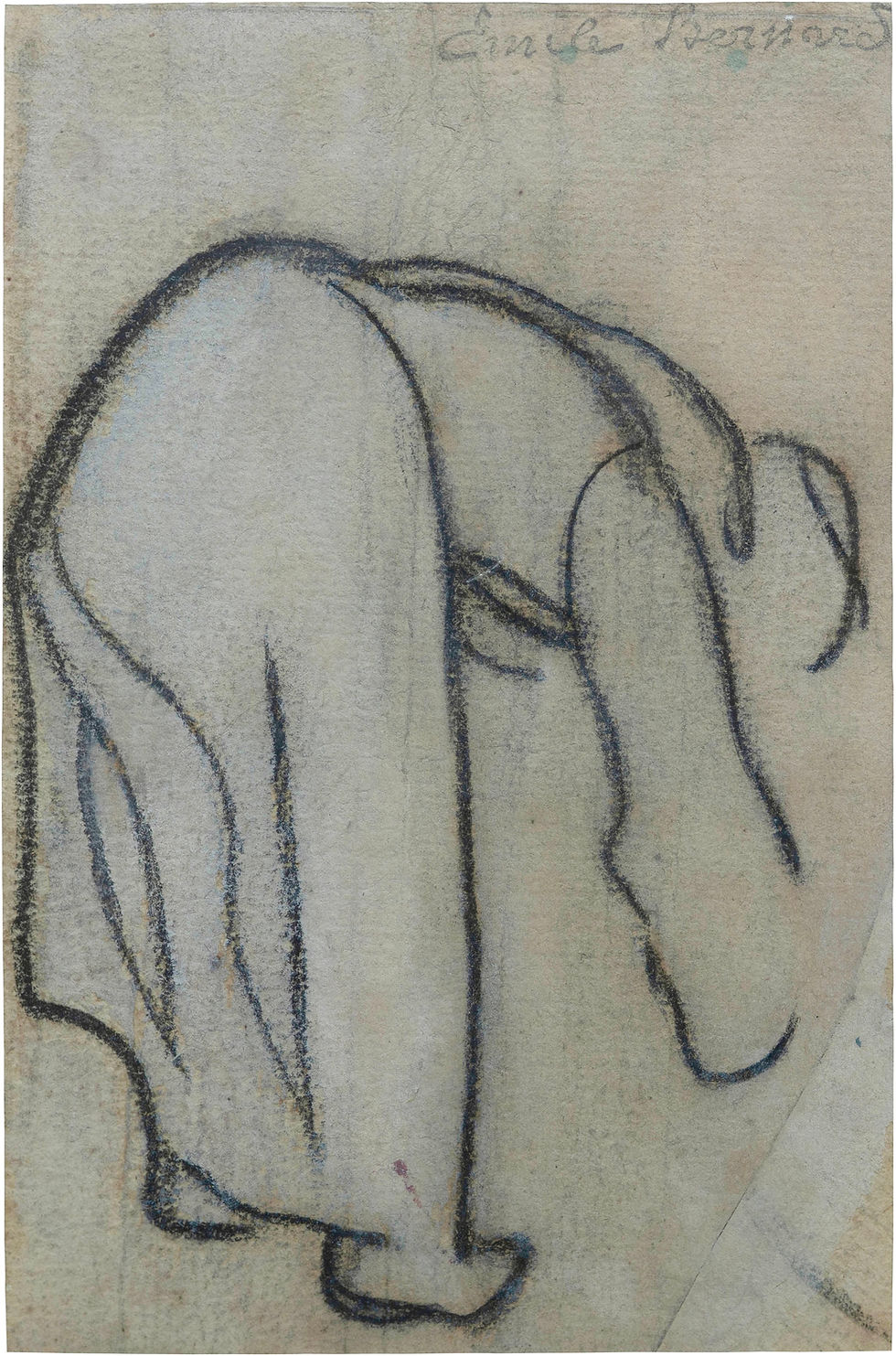
Breton Woman
preparatory for Le Blé Noir
c. 1888
Pastel on paper
130 × 85 mm
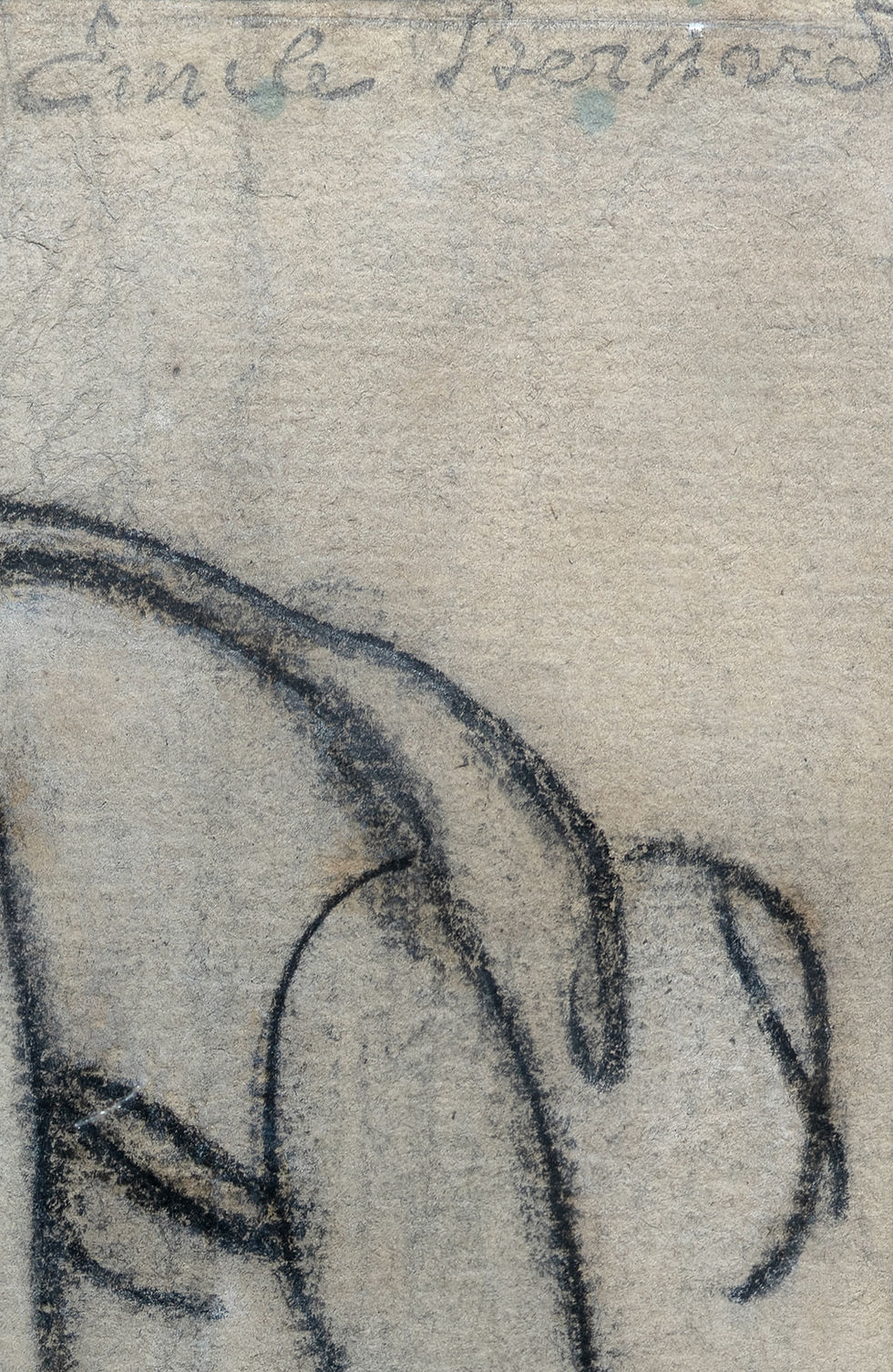
Signed (upper right): “Emile Bernard”
Exhibited:
Bremen, Kunsthalle, Émile Bernard. Gemälde – Handzeichnungen – Aquarelle – Druckgraphik, 5 February – 2 April 1967.
Émile Bernard was a painter, draughtsman, and writer associated with Cloisonnism and Synthetism. Trained in Paris under Fernand Cormon, he worked alongside Paul Gauguin in Pont-Aven. Throughout his career, Brittany remained a great source of inspiration for the artist.
Bernard attached great importance to drawing: in preparation for his paintings, he produced numerous studies in pencil, charcoal or ink to establish poses, drapery, and the underlying structure of his figures. These works reveal a confident hand, a taut line and a precise sense of volume.
In 1888 he painted Le Blé Noir (fig. 1), one of his most celebrated works: women at prayer, dressed in black, set against a vivid red background, a composition which exemplifies the synthetist language he was developing then alongside Gauguin. Our pastel drawing belongs to this preparatory practice: it defines the posture of the leaning figure at the left of the scene. The folded pose, firm contours, and energetic modelling reveal the construction of movement and the search for a vivid, expressive attitude prior to its translation onto canvas.